


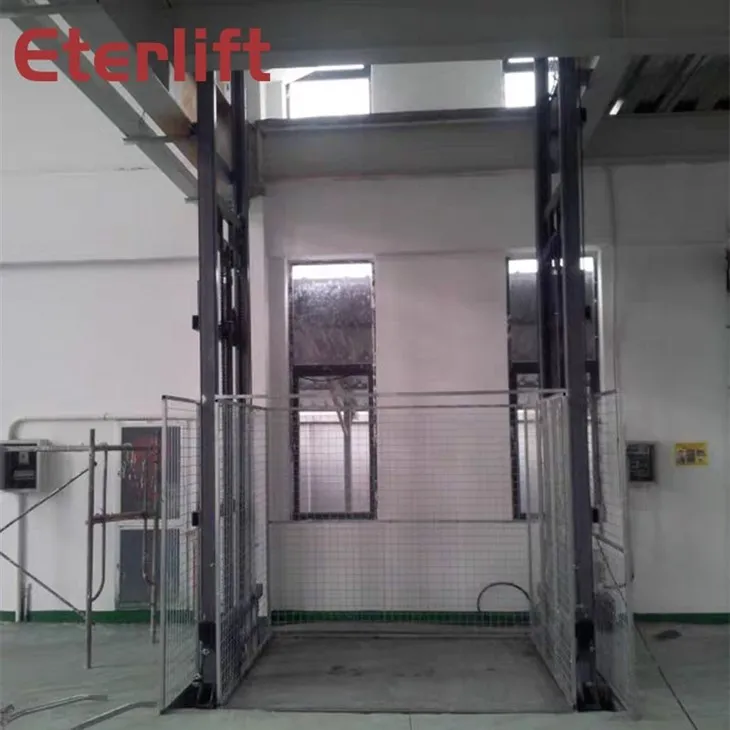


Chain-driven guide rail lifts utilize chains as the primary mechanism for lifting and lowering the platform along the guide rails. These chains come in various types, each offering distinct advantages in terms of load capacity, durability, and performance characteristics. In this comprehensive introduction, we delve into the different chain types commonly employed in guide rail lifts, exploring their features, applications, and considerations for selection.
1. **Roller Chains:**
Roller chains are perhaps the most common type of chain used in guide rail lifts. They consist of cylindrical rollers that engage with the teeth of the sprockets, facilitating smooth and efficient motion. Roller chains are renowned for their high strength, durability, and resistance to wear, making them ideal for heavy-duty applications. Moreover, they are available in various sizes and configurations to accommodate different load capacities and operating conditions.
2. **Leaf Chains:**
Leaf chains, also known as balance chains, feature interconnected link plates that resemble leaves. These chains offer exceptional strength and stability, making them well-suited for lifting heavy loads in guide rail lifts. Leaf chains exhibit minimal stretch under high loads, ensuring precise positioning of the lift platform. Additionally, their design allows for easy maintenance and adjustment, contributing to the overall reliability of the lift system.
3. **Wire Chains:**
4. **Flat-Link Chains:**
Flat-link chains feature flat, rectangular links interconnected to form a continuous loop. These chains are valued for their simplicity, reliability, and ease of installation. While they may not offer the same load-bearing capacity as roller or leaf chains, flat-link chains are well-suited for lighter-duty applications and smaller-scale guide rail lifts. Their straightforward design makes them particularly suitable for situations where space constraints or cost considerations are important factors.


Popularni tagovi:


